
Driving safely at roadworks :Cross Stitch – Travel and transport

Careless driving through roadworks on motorways causes accidents and delays and puts road workers at risk of injury and death. Learn what to expect, what the signs mean and how to prepare, so that you don’t cause an accident.

Driving at 70 mph, you will reach roadworks in 51 seconds
Every year road workers are killed and injured as they work to maintain and improve the motorway network. All these deaths and injuries could be prevented.
The Highways Agency video ‘Respect our road workers’ shows the effects of accidents at roadworks. You can view the video in the format you choose (including a text-only transcript) by following the link below.
The speed limits at roadworks are there to protect drivers too. It is vital for your own safety to reduce speed as the road environment changes, eg with reduced lane size and safety barriers.
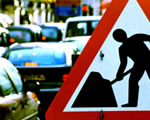
Roadworks range from long-term work involving lane closures to quick ‘rolling’ repairs. They may take place night or day. In each case there will be signs showing drivers what to expect and when.
For quickly completed roadworks you may see signs on the back of working vehicles. For normal temporary roadworks the signs may be mounted by the side of the road.
There is also a range of high-visibility electronic signs. These are often found overhead on gantries and the messages can change depending on the conditions.

When you see this sign flashing from an overhead gantry it means the lane beneath is closed and you must not drive on it
Roadworks can make traffic behave in unusual ways. It is important that you pay attention to the signs and give yourself time react to:
- new traffic patterns
- contraflows (where traffic on one or more lanes travels in the opposite direction to normal)
- narrow lanes
- workers in the road
- lane closures
- restricted views or reduced sight of the road ahead
- temporary speed limits
- detours
- slow-moving equipment
- concrete barriers