
Keeping children safe from poisonous substances :Cross Stitch – Parents
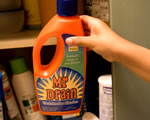
Every week around 500 children under five are rushed to hospital because it’s thought they have swallowed something poisonous. Find out how putting a few simple measures in place can stop this happening to your child.
Keep medicines well out of reach and out of sight of young children. Put them in a high cupboard, a cupboard fitted with a child-resistant catch, a lockable cabinet, or even a lockable suitcase. Don’t keep them:
- on your bedside table – your child can easily get into the bedroom without being seen
- in your handbag – this is a favourite place for toddlers to find tablets
- in the fridge – ‘keep cool’ usually means keep away from direct sunlight or warm places like radiators
If a medicine needs to be kept in the fridge it will say so on the box. If it does, keep it as high up and hidden as possible.
Carbon monoxide is a poisonous gas which can build up when household appliances that use flames – like boilers, water heaters, stoves or open fires – are faulty and are not getting enough oxygen to burn efficiently. Carbon monoxide is particularly dangerous as it has no smell, taste or colour, so it is very difficult to know when it is being produced.
You can guard against carbon monoxide poisoning by doing the following:
- fit carbon monoxide alarms wherever there is a flame-burning appliance
- make sure you keep ventilation outlets in your home free from blockages
- have your flame-burning appliances regularly serviced by a qualified engineer
If you think your child has swallowed a harmful medicine or chemical:
- get advice immediately from your pharmacist, doctor or accident and emergency department – or call NHS Direct on 0845 4647
- find the bottle or packet and take it with you if you go to the hospital
- don’t give your child salt water or anything else to make them sick
- don’t give your child anything to drink – just wet their lips with cold water if they are burning
- if the child is unconscious or there is burning to the mouth, dial 999 immediately to call an ambulance