
When your child needs a car seat :Cross Stitch – Parents

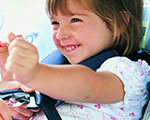
When travelling in a vehicle, children need to use the right car seat until they reach 135 centimetres tall or age 12. The type of car seat your child needs depends on their weight. Find out which seat your child needs.

Never carry a child on your lap or use a single seat belt for two passengers, whatever their age
Adult seat belts aren’t designed for children because children are proportioned differently and their bones are still developing. So until your child is old or tall enough to use an adult seat belt alone, they must use a child’s car seat.
Children’s car seats are designed for different weights – check the label on the seat, which shows the weight range the seat is suitable for. The weight ranges are divided into the following groups:
- ‘Group 0’ and ‘Group 0+’ – these are rear-facing baby seats suitable for babies up to 13 kilogrammes
- ‘Group I’ – these are forward or rearward-facing baby seats for children between 9 and 18 kilogrammes
- ‘Group II’ – these are forward-facing child car seats (booster seats) for children from 15 to 25 kilogrammes
- ‘Group III’ – these are booster cushions for children above 22 kilogrammes
Some seats cover more than one group and can be used as your child grows. Check on the seat label.
Your child needs a rear-facing baby seat until they weigh up to 13 kilogrammes. Baby seats have their own (integral) straps. The adult seat belt or ISOFix system is used to hold the baby seat in place.
You must not use a rear-facing car seat in a seat with a front airbag, unless the airbag has been deactivated. In a crash, a rear-facing seat would be hit by a frontal airbag and could be knocked up towards the rear of the vehicle. Check your car’s handbook for advice about deactivating any airbags. When the airbag is deactivated, move the car’s seat as far back from the dashboard as possible.
When your child weighs between 9 and 18 kilogrammes and has outgrown their rear-facing baby seat, they can use a forward or rearward-facing baby seat. These seats also have their own straps or impact shield and are held in place by the adult seat belt or ISOFix system.
In a seat with a front airbag, make sure a forward-facing child seat is as far back from the airbag as possible.
Children weighing from 15 to 25 kilogrammes can use a child car seat (booster seat). These are forward-facing and may have backs or side wings. Child car seats don’t have their own straps – your child is held in using the adult seatbelt and the seat is held in place by the adult seatbelt and/or the ISOFix system.
Make sure you position a forward-facing booster seat as far back as possible from a frontal airbag.
When your child reaches 22 kilogrammes, they can use a booster cushion. These may not have backs but raise your child in the car’s seat so they can use the adult seat belt.
Many child seats are approved as both Group II and Group III restraints and can be used for children from 15 kilogrammes until they’re ready to use an adult seat belt. Check the label and instructions that come with the seat or booster.
If your child weighs more than 36 kilogrammes but isn’t 135 centimetres tall, they must continue using a booster seat. This is safer than using only an adult belt.
Only European-approved baby seats, child car seats or booster cushions can be used in the UK. These have a label that shows a capital “E” in a circle.
If possible, try the seat in your car before you buy. Ask the sales assistant for advice on how to fit the seat correctly.
Secondhand child car seats or boosters
Be extremely cautious if you’re offered a secondhand seat or booster. Always check that it:
- is an up-to-date model
- has full fittings and instructions
- hasn’t been involved in a crash