
Who can vote – local government elections :Cross Stitch – Government, citizens and rights

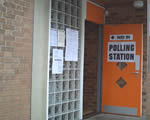
In a local election, you vote for the councillors who run your local services. Councillors are elected for a term of four years, though in some areas they’re not all elected at the same time, so elections may take place more often.
You can vote in local government elections if you have registered to vote and you are:
- a British citizen living in the UK
- a Commonwealth citizen living in the UK
- a citizen of the Irish Republic living in the UK
- a European Union citizen living in the UK
- registered to vote as a Crown Servant
- registered to vote as a service voter
You can not vote in local government elections if you are:
- a British citizen living abroad and registered as an overseas voter
The way you vote for local councillors is similar to voting for Members of Parliament in a general election. In England and Wales, the candidate who gets the most votes wins – this is called a ‘first-past-the-post’ voting system.
When you vote in a local election, the ballot paper will list all the candidates standing to be a councillor in your area. You may be asked to vote for more than one candidate, depending on where you live.
In Scotland and Northern Ireland, you will be asked to rank the candidates in order of preference. This is called the ‘single transferable vote’ system, a form of proportional representation.
In elections for the Mayor of London, you will be asked to mark your first and second choice on your ballot paper, though you don’t have to give a second choice. If no candidate receives more than half of the first choice votes, then second choice votes for the two leading candidates are taken into account to decide the overall winner.
For the London Assembly elections, London is divided into 14 constituencies, whose members are elected using the first-past-the-post system. A further 11 London-wide seats are allocated on a ‘top-up’ basis, where votes are counted across London and the seats are shared among the political parties in proportion to the votes each party receives.
Find out more on the London Elects website.
Local elections take place at least every four years. There are several types of election, because local authorities are organised in different ways, depending on where you live. Either:
- all of the councillors are elected every four years
- half of the councillors are elected every two years
- a third of the councillors are elected every year for three years, with no elections in the fourth year
To find out whether there is a local election coming up in your area, visit the About My Vote website or contact your local council. You can also find out election results in your area from your local authority website.
To stand for election, candidates must either live in the electoral area and be registered to vote there, or have some other close connection with the area, like working there.
Councillors are paid a basic allowance, but may also be entitled to additional allowances and expenses for attending meetings or for taking on special responsibilities.
The Electoral Commission publishes information for people interested in standing as a candidate for election.